
A History of Withington
Chapters II–XXIV: From the Norman Manor to the Modern Day
Withington News · 9 November 2026
Before the Village: Roman Roads and Ancient Landscape
Pre-history to 1000 AD
Long before Withington had a name, the land was shaped by glacial meltwater, leaving behind the flat, well-drained soils that would later attract farmers and settlers. The Romans built a road through the area connecting their fort at Mamucium — modern Manchester — southward through what is now Didsbury and beyond. Traces of this route survive in the alignment of Wilmslow Road, one of the oldest thoroughfares in south Manchester.
After the Romans withdrew in the early 5th century, the area passed through centuries of Brittonic, Anglian and Danish settlement. The Mercians pushed north and west, and by the 9th century the Danes had established themselves across much of Lancashire. Didsbury, just to the south, may have been fortified in King Edward the Elder's reign as a defence against Danish incursion — a reminder that this quiet suburb was once a frontier.
The Name and the Land
Anglo-Saxon
The name Withington comes from the Old English Wīðign-tūn — a willow-copse farmstead. The withy, a willow branch used for bundling, gave this corner of south Lancashire its identity long before it had streets or shops. In Anglo-Saxon times the area was sparsely settled, its character defined by the River Mersey to the south and the boggy ground that lay between the scattered farmsteads.
Following the Norman Conquest, the lands of south Lancashire were granted to Roger of Poitou. By the early 13th century the Manor of Withington had emerged as a sub-manor of the Manor of Manchester, covering a wide area that included Withington, Didsbury, Chorlton-cum-Hardy, Moss Side, Rusholme, Burnage, Denton and Haughton. The first Lord of the Manor is thought to have been William, son of Wulfrith de Withington.
The Manor and the Hathersage Family
13th–15th century
In the 13th century, Robert Grelle, Lord of the Manchester Manor, granted free warren in Withington to Matthew de Hathersage, son of William, in exchange for one knight's fee. Little is known of the Hathersage family beyond their descent to the Longford family and their connections with the manors of Hathersage and Longford in Derbyshire. The lordship of Withington remained in the Hathersage and Longford family for over 300 years.
Withington was one of the townships of the ancient parish of Manchester in the Salford Hundred of Lancashire — a quiet, largely rural estate whose name and character were shaped by the land itself rather than by any great event or famous figure. The medieval open field system left its mark on the landscape, with strips of common land and shared pasture that persisted long after the manorial system itself had faded.
The Mosleys and Hough End Hall
Tudor & Stuart

At the end of the 16th century, Nicholas Longford sold Withington to the Mosleys — an influential family of wool merchants who had become wealthy landowners. Sir Nicholas Mosley became Lord Mayor of London in 1599 and High Sheriff of Lancashire from 1609 to 1610. He died in 1612 and was buried in St James's Church, Didsbury, where a monument shows him kneeling in the robes of the Lord Mayor. In 1596, the family built Hough End Hall as the new Withington manor house.
The original medieval manor house had stood south-east of the modern junction of Mauldeth Road West and Princess Road, surrounded by a moat. In 1750 it was demolished to make way for a farm building, though some of the moat remained. An Ordnance Survey map of 1845 records it as 'Withington Old Hall'. Today the site is occupied by Eddisbury Avenue — and remnants of the moat survive beneath Old Moat Primary School on Old Moat Lane.
The Red Lion and the Court Leet
17th–18th century
The Red Lion public house, dating from the 17th century, served as the meeting place of the Court Leet — the local manorial court that administered justice and regulated community affairs across the township. It stands as one of the most tangible surviving links to Withington's pre-industrial past, a reminder that before the railways and the factories, this was a place governed by custom and community.
The Mosley male line eventually failed and the estates passed to the Bland family, then to the Egertons of Tatton. The Manor of Manchester was still the property of the Mosley family when Manchester was incorporated as a borough in 1838. By an agreement dated 24 June 1845, Sir Oswald Mosley sold the manorial and market rights to the corporation for £200,000 — 250 years after their purchase by Sir Nicholas Mosley for £3,500.
The Village on Wilmslow Road
18th century
Withington as a village developed around Wilmslow Road, the main road connecting Manchester to Wilmslow and the only direct route between the two at the time. Farming still dominated the area, though maps show evidence of a substantial cotton house on Cotton Lane — later to become Withington Hall. Some historians dispute this, suggesting 'Cotton Lane' derives instead from land jointly held by the townships of Withington, Didsbury and Burnage, a relic of the medieval open field system.
The small flower display on the corner of Wilmslow Road and Cotton Lane is the only relic of the old village centre that remains today. The Withington Manor had by this time passed to the Egertons of Tatton, who continued to own large areas in and around Withington well into the 20th century.
Mendelssohn and the Souchay Family
Early Victorian
Withington had a Huguenot population with family and commercial ties to Germany. Among them was the Souchay family, who lived at Withington House on Wilmslow Road — on the present site of the telephone exchange at Old Broadway. Charles Souchay and his wife Adelaide were benefactors of St Paul's church school, and the first wedding at St Paul's was the marriage of the eldest Souchay daughter in 1850.
The Souchays were related to Cécile Mendelssohn Bartholdy, wife of the German composer Felix Mendelssohn. In the 1840s, Mendelssohn made several visits to Britain and stayed on occasion with friends in the Withington and Didsbury area. He wrote a number of letters from Eltville House, the residence of John D. Souchay, situated on the south-east corner of Fog Lane and Wilmslow Road — a connection between this quiet Manchester suburb and one of the great composers of the Romantic era.
Victorian Growth and St Paul's Church
Victorian

Trade in Withington increased steadily as Manchester flourished in the early 19th century. Turnpike roads became increasingly unpopular and were abolished completely in 1881. Cheaper transport into Manchester became a key factor in the area's growth. The Withington and West Didsbury railway station on the Manchester South District Line, run by the Midland Railway, provided services to Manchester Central — until it closed to passengers in 1961.
Withington's Parish Church of St Paul was built in 1841, designed by architects Hayley & Brown and extended in 1864. Many other chapels and churches followed — Methodist, Presbyterian and Roman Catholic. As the population grew, so did the need for schools. A day school was held beneath the Wesleyan chapel on Old Hall Lane until the Church of England established St Paul's Primary School in 1844, on land donated by Wilbraham Egerton, 1st Earl Egerton.
The Library and the Village Hall
Victorian
In 1861, a public library and village hall were opened in Withington — civic institutions that reflected the growing confidence and ambition of the community. The library was one of the earliest in the Manchester area, a sign that Withington's residents were prosperous enough to demand cultural amenities as well as commercial ones.
The village hall became a centre for public meetings, lectures and entertainment. Withington was developing the infrastructure of a modern suburb: gas lighting arrived in the 1850s, and the first horse-drawn trams began running along Wilmslow Road in 1880, cutting the journey time to Manchester city centre and opening the area to a new wave of middle-class residents.
Joining Manchester
1904
On 1 April 1904, Withington Urban District was absorbed into the City of Manchester — one of a series of boundary extensions that transformed Manchester from a compact industrial city into a sprawling metropolitan authority. The decision was controversial locally; Withington had its own identity, its own institutions and its own sense of civic pride. But the logic of urban growth was irresistible.
The incorporation brought new investment in roads, sewers and public services, but it also marked the end of Withington as an independent administrative unit. The old village centre around Wilmslow Road and Burton Road continued to thrive as a local high street, and the area retained a distinct character that it has never entirely lost.
Louis Paulhan and the First London–Manchester Flight
1910

On 28 April 1910, French aviator Louis Paulhan completed the first non-stop flight from London to Manchester, landing his Farman biplane in Barcicroft Fields, Withington — just south of what is now Hough End Playing Fields. The flight, which took 4 hours 12 minutes, won Paulhan the Daily Mail prize of £10,000 and made Withington briefly famous across the world.
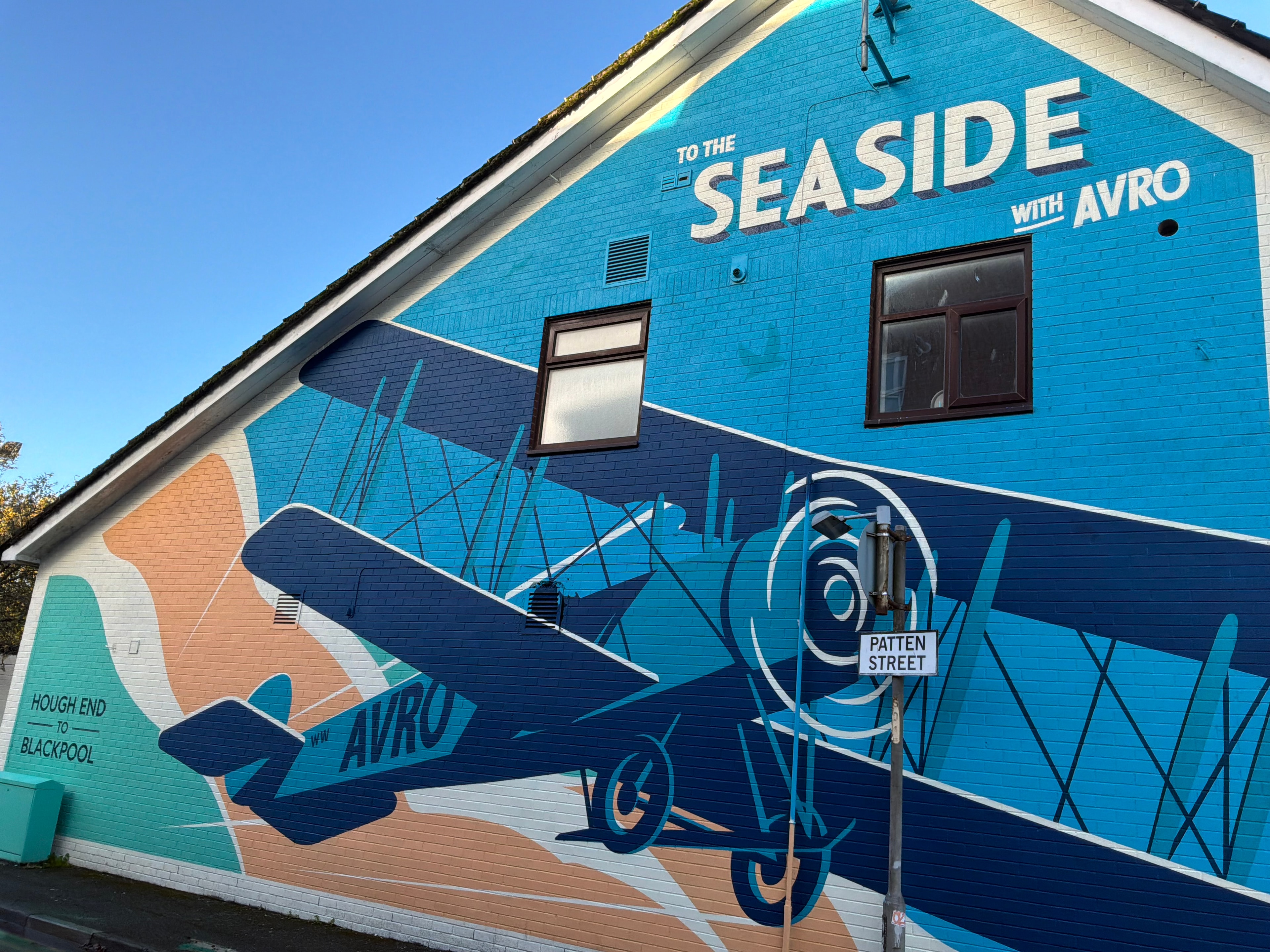
Paulhan had taken off from Lichfield at dawn, having stopped overnight after leaving London. His rival, Claude Grahame-White, attempted to catch him by flying through the night — the first night flight in British aviation history — but was forced down by engine trouble. Paulhan's landing in Withington drew a crowd of thousands, and the event is commemorated today by the Avro mural on Patten Street.
Alexandra Park Aerodrome
1910–1926
Inspired by Paulhan's landing, Manchester Corporation established Alexandra Park Aerodrome on the fields south of Alexandra Park — the first municipal aerodrome in Britain. It opened in 1910 and operated until 1926, when it was superseded by Barton Aerodrome. During its 16 years of operation it hosted air displays, experimental flights and early commercial aviation, cementing Withington's place in the history of British flight.
A.V. Roe — Alliott Verdon Roe, founder of the Avro aircraft company — was closely associated with the aerodrome and conducted test flights from the site. Avro went on to produce some of the most significant aircraft in British aviation history, including the Lancaster bomber and the Vulcan. The connection between Withington and Avro is celebrated in the mural on Patten Street, painted in 2019.
The First World War
1914–1918
The First World War transformed Withington as it transformed every community in Britain. Men from the streets around Wilmslow Road and Burton Road enlisted in the Manchester Regiment and other units, and many did not return. The war memorial in St Paul's churchyard records the names of those who fell — a permanent reminder of the cost paid by this quiet suburb.
The Alexandra Park Aerodrome took on a military role during the war, used for training and observation. The factories of Manchester, not far to the north, switched to war production, and Withington's residents found themselves drawn into the industrial effort. The war accelerated social change: women entered the workforce in large numbers, and the old certainties of Edwardian suburban life were never quite restored.
The Interwar Years: Suburbia Comes of Age
1919–1939
The interwar years saw Withington consolidate its identity as a prosperous middle-class suburb. The trams were supplemented by motor buses, and the electric tram service along Wilmslow Road made the journey to Manchester city centre faster and more comfortable than ever. New housing spread across the fields between the old village centre and the surrounding townships.
The Burton Road and Wilmslow Road shopping parades flourished, with independent traders, banks, cinemas and cafes serving a growing population. Withington Baths, opened in 1913, became a social hub. The area attracted Jewish families moving south from Cheetham Hill and Salford, adding a new cultural dimension to the neighbourhood that would shape its character for decades to come.
The Second World War
1939–1945
The Second World War brought the conflict closer to home than the first. Manchester was heavily bombed during the Christmas Blitz of December 1940, and while Withington itself escaped the worst of the damage, the fires in the city centre were visible from Wilmslow Road. Air raid shelters were built in gardens and parks, and the community organised itself for civil defence.
Withington Hospital — opened in 1902 as the Manchester Union Infirmary — played a vital role in treating casualties from the Blitz and from the fighting fronts. The hospital had grown steadily in the interwar years and by 1940 was one of the largest in the north of England. Its closure in 2002 remains a source of grief and controversy in the local community.
Post-War Withington: Change and Challenge
1945–1970
The post-war decades brought significant change to Withington. The Welfare State transformed daily life: the National Health Service took over Withington Hospital, and the new comprehensive schools replaced the old grammar and secondary modern system. Council housing was built on the edges of the suburb, and the population became more diverse as immigrants from the Caribbean, South Asia and Ireland settled in the area.
The trams were withdrawn in 1949, replaced by buses. The railway station closed to passengers in 1961. The old village hall was demolished. Withington was changing, and not everyone welcomed the pace of change. The independent traders on Burton Road and Wilmslow Road faced increasing competition from supermarkets and out-of-town retail, and the character of the high street began to shift.
The University Quarter
1960s–1980s
Withington's proximity to the University of Manchester and Manchester Metropolitan University made it a natural home for students and academics. From the 1960s onwards, the large Victorian terraces were increasingly converted into student accommodation, and the area developed the bohemian, transient character that it retains today. Curry Mile — the stretch of Wilmslow Road through Rusholme, just to the north — became one of the most celebrated restaurant strips in Britain.
The student population brought new energy to the local economy: record shops, bookshops, independent cafes and music venues flourished alongside the traditional traders. Withington became known as a place where different communities and cultures mixed — a reputation that attracted creative people and entrepreneurs, and that continues to define the area's identity.
The 1980s: Recession and Resilience
1980s
The recession of the early 1980s hit Manchester hard. Unemployment rose sharply, and the communities around Withington — particularly Moss Side and Hulme to the north — experienced serious social unrest. The Moss Side riots of July 1981 were a response to poverty, policing and racial tension, and they cast a long shadow over the whole of south Manchester.
Withington itself was relatively insulated from the worst of the recession, but the area was not untouched. Empty shops appeared on Burton Road, and the sense of suburban prosperity that had characterised the interwar and post-war decades gave way to something more uncertain. Community organisations, churches and voluntary groups played a vital role in holding the neighbourhood together through difficult years.
The IRA Bombing and Manchester's Renewal
1990s
The IRA bomb that devastated Manchester city centre on 15 June 1996 was the largest bomb detonated in Britain since the Second World War. No one was killed, but 212 people were injured and the damage to the city centre was enormous. The rebuilding of Manchester that followed transformed the city, and the ripple effects were felt in Withington as investment flowed into the wider metropolitan area.
The 1990s also saw the beginning of a sustained regeneration of south Manchester. The Metrolink tram network, which had opened in 1992, was extended southward, and plans were drawn up for new housing, retail and leisure developments. Withington began to attract a new generation of young professionals and families, drawn by the Victorian housing stock, the independent shops and the proximity to the universities.
Withington Hospital: A Community Fights Back
1990s–2002
The proposed closure of Withington Hospital provoked one of the most sustained campaigns of community resistance in the area's modern history. The hospital had served south Manchester for a century, and its closure — announced in the late 1990s as part of a rationalisation of NHS services — was bitterly opposed by residents, patients and staff.
Despite the campaign, the hospital closed in 2002. The site was subsequently redeveloped for housing. The loss of the hospital remains a raw wound in the community's memory, a symbol of the way in which decisions made in distant boardrooms and government offices can reshape the life of a neighbourhood. The campaign also demonstrated the capacity of Withington residents to organise, argue and fight for what they believe in.
The 2000s: Regeneration and the New Withington
2000s
The 2000s brought a wave of regeneration to Withington. The Burton Road and Wilmslow Road shopping parades were revitalised by a new generation of independent traders — coffee shops, restaurants, delis and boutiques that reflected the changing tastes of the area's increasingly affluent and cosmopolitan population. The Withington Baths, threatened with closure, was saved by a community campaign and reopened as a leisure centre.
New housing developments filled in the gaps left by demolished buildings, and the Victorian terraces were renovated and extended. Property prices rose sharply, and Withington began to attract the kind of media attention — 'the new Didsbury', 'south Manchester's best-kept secret' — that signals the arrival of gentrification. The community's response was mixed: pride in the area's revival, anxiety about affordability and displacement.
The Avro Mural and Cultural Memory
2010s
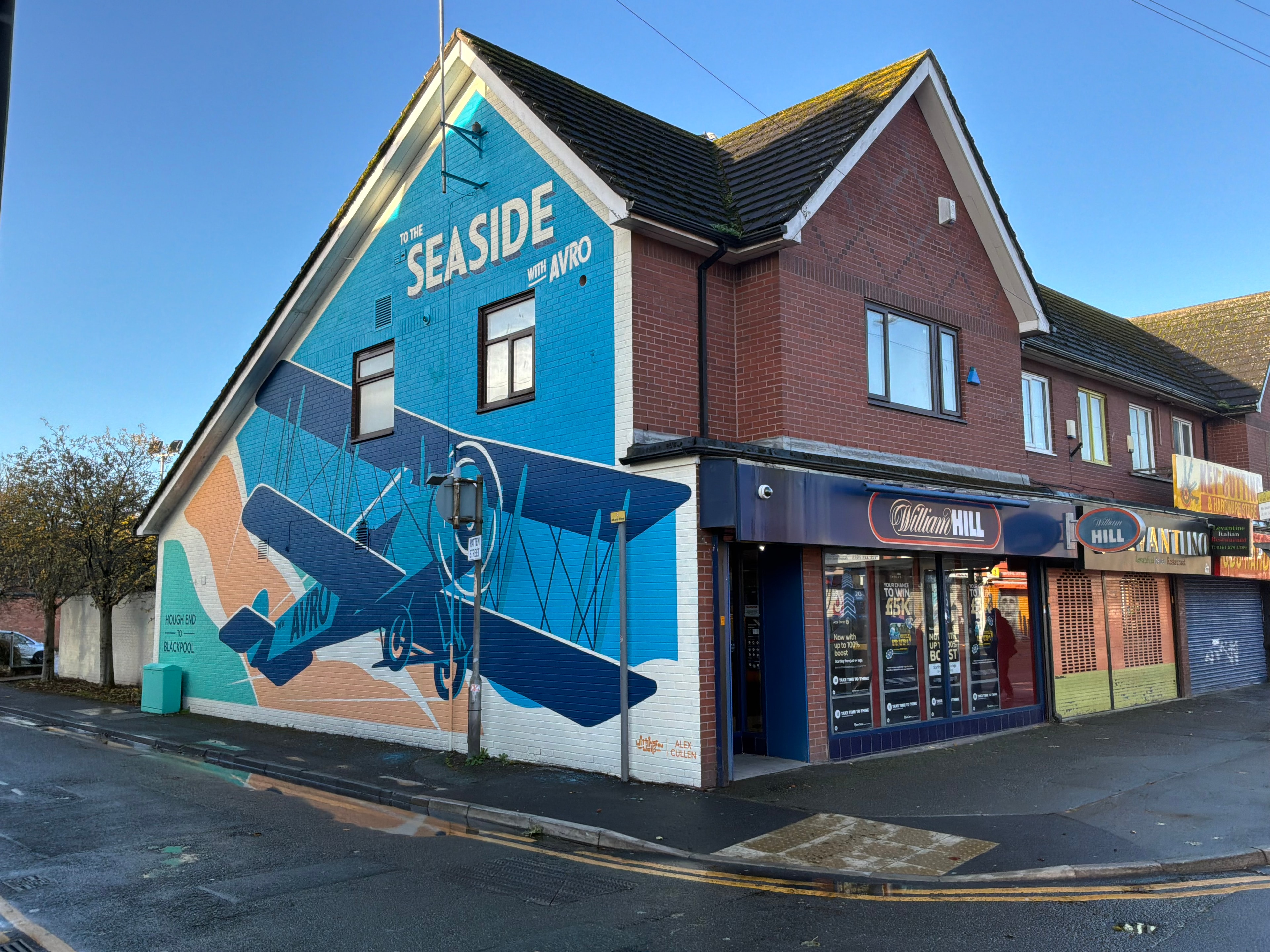
In 2019, a large mural was painted on the gable end of a building on Patten Street, depicting the Avro aircraft that had made Withington famous in the early years of aviation. The mural was commissioned as part of a wider programme of public art in the area, and it quickly became one of the most photographed landmarks in south Manchester.
The mural is more than a piece of street art: it is an act of cultural memory, a way of anchoring the neighbourhood's identity in its own history. Withington has always been a place that looks forward — to the next development, the next wave of residents, the next reinvention of the high street — but the mural is a reminder that the past is always present, shaping the streets and the stories of the people who live in them.
Covid-19 and Community
2020–2022
The Covid-19 pandemic of 2020 tested Withington's community spirit as nothing had since the Second World War. The lockdowns closed the shops, cafes and pubs that gave the area its character, and the streets that had always been busy with students, shoppers and dog-walkers fell silent. But the community responded with remarkable energy: mutual aid groups sprang up overnight, volunteers delivered food and medicine to vulnerable residents, and neighbours who had never spoken found themselves talking over garden fences.
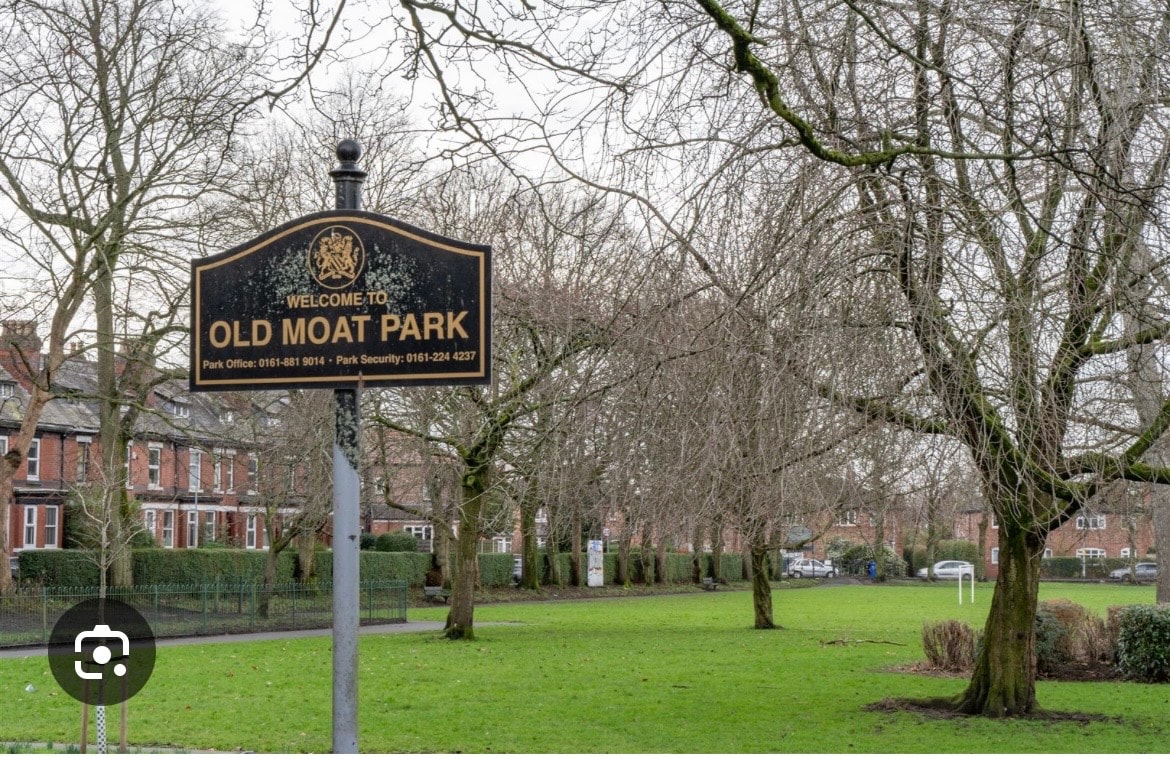
The pandemic also accelerated changes that were already underway: more people working from home, more reliance on local shops and services, a renewed appreciation for parks and green spaces. Old Moat Park and Fog Lane Park became vital refuges during the lockdowns, and the experience of the pandemic strengthened the case for investing in local amenities and community infrastructure.
Withington Today
Present
Withington today is a neighbourhood of contrasts and continuities. The Wilmslow Road and Burton Road shopping parades remain the heart of the community, lined with independent traders, restaurants and cafes that reflect the area's diversity. The Victorian terraces are home to students, families, young professionals and long-established residents who have watched the neighbourhood change over decades.
The challenges are real: housing affordability, the future of the high street, the pressure on local services, the need to balance growth with community. But so are the strengths: a strong sense of local identity, a tradition of civic engagement, a diverse and creative population, and a history that stretches back more than a thousand years to the willow-copse farmstead on the edge of the Mersey plain. Withington endures — and it continues to surprise.

Sources: Wikipedia / Withington article; Manchester Local Image Collection; Greater Manchester Archaeological Unit. This feature draws on publicly available historical records. Corrections and additions welcome — write to us at info@withington.news.